Articles /

A commercial padel court is a purpose-built sports facility designed for public hire, coaching, and events. A typical UK installation costs roughly between £45,000 and £80,000 per court.
This guide, by the #1 UK padel court builder, explains commercial padel court costing, construction cost drivers, likely revenue streams, and practical funding routes to help venue owners and developers make informed decisions.
Many investors struggle to compare quotes because prices vary by groundworks, materials, indoor versus outdoor specification, lighting, and ancillaries; this article breaks those variables down clearly. You will also find simple ROI guidance, funding options, including the LTA Quick Access Loan Scheme, and why a turnkey partner can reduce risk.
The guide covers average costs, component-level cost drivers, profitability scenarios, financing paths, and a short supplier checklist so you can move from initial estimate to a formal quote.
Read on to understand cost ranges, what influences price, and the next practical steps for a commercial padel project in the UK.
A typical commercial padel court in the UK usually costs between £45,000 and £80,000 per court, depending on specification, site conditions, and whether the court is permanent or portable.
This range generally includes the court structure, standard artificial turf, tempered glass or mesh panels, basic lighting, and installation labour, while it may exclude complex groundworks, planning fees, and high-end ancillaries. Understanding that price bands reflect different inclusions helps procurement: an entry-level outdoor court uses simpler foundations and standard turf, while premium panoramic courts add tempered glass and higher-spec surfacing.
The following table summarises typical per-court cost bands for quick reference, and the brief notes below show what each band commonly includes and omits to guide initial budgeting.
Different court types have distinct cost bands and included items:
This table gives a quick budget framework to compare quotes and choose the band that matches your site and business plan. For a tailored estimate, use a cost calculator and downloadable brochure to refine inputs and expectations.

Typical price bands reflect scope and site complexity: entry-level outdoor courts focus on core playability, standard turnkey packages add durability and finish, and premium panoramic options prioritise aesthetics and spectator experience. Entry-level installations assume straightforward ground conditions and minimal planning, which keeps costs lower but may reduce long-term durability. Standard turnkey options include more robust foundations and tempered glass, making them suitable for commercial venues where repeated high use is expected. Premium panoramic courts invest in higher-spec materials and finishes to attract events and sponsorship, which increases upfront cost but can enhance revenue potential.
Indoor padel court construction adds building envelope costs—roof, walls, insulation, HVAC, and higher electrical capacity, so indoor installations typically carry a substantial premium over outdoor courts. Outdoor courts need more focus on drainage, sub-base durability, and frost protection, but avoid building-shell costs, which keeps initial spend lower.
Operating costs diverge too: indoor courts require ongoing heating, ventilation, and dehumidification, which raises utilities and maintenance. When comparing quotes, separate the structural (building) and court system costs to see where savings or investments will most affect long-term performance.
The number of courts drives economies of scale because fixed costs such as groundworks, access roads, reception, and shared lighting infrastructure are spread across multiple courts.
A single-court project bears a higher per-court share of mobilisation and access works, while a 3–5+ court facility typically reduces per-court cost by reusing foundations, cabling, and support structures. Planning and layout efficiencies also lower per-court installation time and resource churn on multi-court sites.
Consider multi-court planning early to capture these savings and to model revenue aggregation from simultaneous bookings and events.
Major cost drivers explain why quotes differ: groundworks and site preparation, material choices (glass panels, turf quality, steel frames), lighting and ancillaries, and planning or regulatory requirements all materially affect the final price.
Each component can be specified at multiple quality levels, where higher quality increases longevity and performance but raises upfront cost. Evaluating trade-offs between initial expenditure and long-term operating cost is essential when targeting ROI.
The following comparison table clarifies core component attributes and typical cost drivers to focus budget discussions with contractors and funders.
Component-level attributes show where money is spent and why:
This table highlights that difficult ground conditions and higher-spec structural materials are the largest single cost influencers. Early site surveys help isolate these risks and refine budgets.
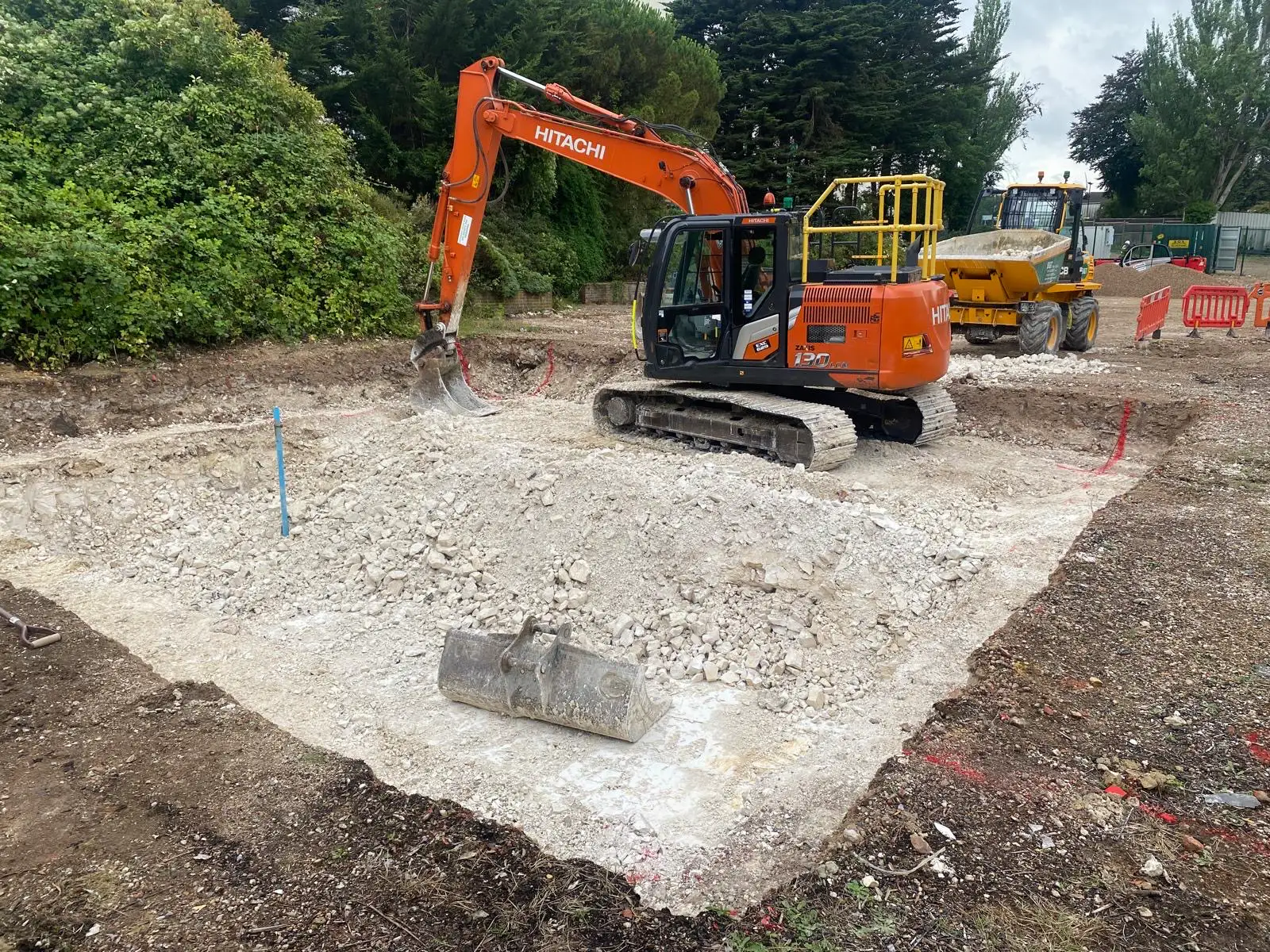
Groundworks set the baseline for a reliable court because sub-base depth, drainage design, and foundation type determine durability and play performance.
Poor soil or contamination requires deeper excavations, import of engineered fill, or specialist foundations, which significantly increase cost and programme time. Access constraints and site slope add logistic costs and may require retaining structures or staged construction.
Early site investigation and contingency budgeting reduce surprises and support stronger lender or grant applications by demonstrating risk management.
Material choice balances cost, aesthetics, and maintenance: tempered glass panels enhance spectator visibility and a premium feel but cost more upfront and require specialist installation and maintenance. Artificial turf options vary by pile height and infill; higher-spec turf improves ball behaviour and reduces replacement frequency but increases initial outlay.
Steel frame quality affects long-term stability; heavier-gauge frames resist wear in high-use commercial settings with lower lifetime maintenance.

Lighting and ancillaries—floodlighting, power distribution, seating, fencing, and security—are essential to usable hours and customer experience and therefore influence both cost and revenue potential. Higher lux levels and energy-efficient LED systems cost more initially but reduce operating expenses and support evening bookings.
Optional extras such as scoreboards, CCTV, and covered spectator areas improve event hosting capability and sponsorship appeal. Phasing ancillaries over time can manage upfront capital while still enabling commercial operation from day one.
Planning permission and regulatory requirements vary by local authority and site; costs include application fees, surveys (ecology, tree, flood), and consultant time, which can extend project timelines and budgets. Typical conditions may cover lighting spill, acoustic mitigation, and public access, and some projects will need pre-application engagement to reduce refusal risk.
Working with a construction partner familiar with UK planning processes reduces administrative burden and helps present stronger planning submissions.
Engaging early with planners reduces delays and clarifies likely regulatory costs.
Yes — investing in a commercial padel court is often profitable when utilisation, pricing, and ancillary revenues are well modelled; revenue streams typically cover operating costs and repay capital within a realistic timeframe.
Revenue depends on court hire, coaching, memberships, events, and ancillary sales, while costs include maintenance, staffing, and utilities. A simple ROI model subtracts annual operating expenses from gross revenue and divides by construction cost to estimate payback.
The following table presents a compact revenue snapshot to guide conservative, realistic, and optimistic scenarios for early-stage modelling.
Revenue streams can be modelled to estimate annual income and payback:
This snapshot helps create payback timelines; combined steady bookings and coaching often produce a multi-year payback that improves with scale and ancillary development.
Commercial padel courts generate income from court bookings, coaching programmes, memberships, tournaments, and ancillary sales such as equipment and F&B.
Court hire is typically the principal income source with predictable hourly revenue, while coaching and academies deliver high-margin, repeatable income and drive utilisation. Events and tournaments create spikes in revenue and marketing exposure that support sponsorship opportunities.
Ancillary sales increase average spend per visit and improve overall profitability.
Return on investment is calculated by subtracting annual operating costs from annual revenue to find net operating income, then dividing net income by total construction cost to produce ROI; payback period is the construction cost divided by annual net income.
Key inputs include utilisation rate (hours booked per week), price per hour, average coaching revenue, and fixed operating expenses. Running conservative and optimistic scenarios helps investors understand sensitivity to demand and pricing and supports conversations with lenders.
Typical ROI timelines vary, but many commercial projects aim for payback within 3–7 years, depending on utilisation, pricing strategy, and ancillary income.
High-traffic urban locations with strong coaching programmes and event schedules shorten payback, while remote sites or single-court projects extend it. Factors that accelerate ROI include multi-court layouts, strong community engagement, and diversified revenue; risks include low utilisation and unexpected maintenance.
Careful financial modelling and staged investment reduce downside and clarify realistic timelines.
Funding options combine public schemes, private loans, and leasing to match project size and risk profile; understanding eligibility and preparing accurate cost estimates are essential before approaching funders. The LTA Quick Access Loan Scheme is a named support route that helps clubs and providers access funding for facility development, while private financing and equipment leasing provide alternative capital structures.
Preparing detailed project budgets, cash flow forecasts, and contractor quotes strengthens applications and improves lender confidence. Below is a short list of common funding routes and practical next steps to pursue them.
Common funding and financing routes include:
These routes can be combined to match timing and cashflow needs, and working with a construction partner helps present cohesive applications.
The LTA Quick Access Loan Scheme offers targeted lending to clubs and facility providers to accelerate court build projects and increase participation; it typically supports capital works, equipment, and facility upgrades.
Eligible organisations can use loans to fund construction, and the scheme reduces upfront funding barriers for community-focused projects. Combining a clear business plan with contractor estimates improves the chance of a successful application and aligns project costings with lender expectations. For guidance on preparing applications and aligning construction timelines with funding, a specialist construction partner can offer assistance.
Private financing includes bank loans, commercial mortgages, and asset leasing arrangements where equipment or staged construction payments reduce initial capital needs.
Leasing can be attractive for portable or temporary courts, spreading the cost and allowing flexibility for events. When seeking private finance, lenders will request detailed forecasts, contractor quotes, and contingency planning; presenting realistic utilisation and revenue models improves outcomes. Preparing these documents with professional support enhances credibility and speeds approval.
Lofthouse Padel Court Specialists provides turnkey padel court solutions that manage planning, groundworks, construction, and finishing to simplify delivery and reduce client risk. As part of a wider construction group, the company offers both permanent and portable court options with full panoramic courts and various surface materials to match site goals and budgets.
Their service model is designed to coordinate planning permission guidance, detailed specifications, and construction oversight to keep projects on track and aligned to commercial objectives. Lofthouse also publishes tools to support early-stage decision making, including a Padel Court Cost Calculator and a downloadable Padel Court Brochure for prospective clients.
Lofthouse’s turnkey approach covers initial planning, site surveys, groundworks, installation, and handover, creating a single point of accountability for complex projects.
This reduces client management overhead and clarifies scheduling, procurement, and quality control through one coordinated supply chain. A single contractor model reduces the risk of gaps between trades and helps maintain consistent standards across civil works, structure, and finishes.
Requesting a free consultation clarifies the scope, timeline, and likely costs so investors can make decisions with confidence.
Lofthouse offers material choices including tempered glass panoramic panels, a range of artificial turf specifications, and robust steel frame systems, allowing clients to balance aesthetics, performance, and budget. Customisation options include branded surfacing, lighting specifications, and accessory packages tailored to event, coaching, or membership models.
Material choices are presented with sample specifications and lifecycle considerations to help clients choose the best long-term value. These options support building permanent padel courts or portable and temporary padel courts, depending on client needs.
Building a padel court in the UK involves many moving parts — from accurate site surveys and planning approvals to quality materials, groundworks, and ongoing maintenance. While headline figures give a useful benchmark, every site’s access, drainage, and specification requirements can shift the final cost significantly.
Partnering with specialists experienced in LTA- and SAPCA-compliant padel court construction ensures that technical standards, safety, and long-term performance are built into every stage. Whether you’re developing a private residential court or a multi-court commercial facility, early planning, clear documentation, and sound project management are key to staying on budget and meeting timelines.
Lofthouse Padel Court Specialists provide a complete turnkey service, from feasibility and design to installation and handover, so you can move confidently from estimate to execution. Contact the team today to arrange a site consultation or download a brochure to start planning your project.
1. Do you need planning permission to build a padel court?
In most cases, yes — especially for new outdoor courts, floodlighting, or enclosures. Requirements vary by local authority, so early consultation with the planning department or a specialist advisor is recommended. Temporary or small-scale domestic courts may be eligible for permitted development, but this must be confirmed in writing.
2. How long does it take to build a padel court?
For a straightforward outdoor installation, the build itself can take 6–8 weeks, provided planning and groundworks are already complete. Indoor or multi-court commercial projects can extend to 3–6 months, depending on structure, utilities, and material lead times.
3. What are the maintenance requirements?
Expect to replace the artificial turf every 5–10 years and budget for periodic cleaning of glass panels, net tensioning, and lighting inspections. Setting aside roughly 2–5% of the initial capital cost annually helps maintain playing quality and safety compliance.
4. Can existing tennis or sports courts be converted into padel courts?
Yes. Many developers convert underused tennis courts or multi-use games areas into padel courts by adjusting the footprint and adding a padel-specific enclosure and surfacing. Conversion can reduce costs compared with new groundworks.
5. What funding is available for padel courts?
The Lawn Tennis Association (LTA) offers support through its Padel Development Fund and other sport-body initiatives aimed at community clubs. Combined with private financing or staged payments, this can significantly reduce upfront costs.
LTA Padel Court Construction Guidance (2025)
6. How do indoor and outdoor courts compare for year-round play?
Outdoor courts are cheaper to install but weather-dependent, while indoor courts provide consistent conditions, higher utilisation rates, and greater ROI for commercial operators. The trade-off is a higher upfront cost and operational expenses.
7. What factors most affect total cost?
Key drivers include site access, ground conditions, specification level (indoor/outdoor), lighting, and regulatory requirements. Obtaining a professional site survey early gives the most reliable quote.
Looking to bring padel to your home, school, or sports facility?
At Lofthouse Padel Court Specialists, we design and build premium courts tailored to your space, goals, and budget. From planning permission to professional installation, we handle everything with expertise and care.
Get in touch today to start your padel court project with trusted UK specialists.


We provide our clients with comprehensive turnkey solutions, managing everything from initial planning applications and groundworks to full construction and finishing touches - so you can stay focused on the game.


Registered in England & Wales | Company No. 11269888 | VAT No. GB 30 1554 934 | Privacy Policy
Powered by Construct Virtual website design and hosting
With over 20 years of experience in the construction and housebuilding industry, Richard has led Technical, Planning, and Design teams for construction and PLC housebuilders. Having assisted in the delivery of key developments such as Kew Riverside and Grosvenor Dock in Chelsea, and managing projects ranging from 50 to 750 homes, complete with schools, sports facilities, and retail units.
His experience spans bespoke high-end homes, retail and commercial schemes. He has also contributed to innovative projects like the Northstowe new town near Cambridge and is a strong advocate for modern construction methods.
With over 25 years of experience in finance and office management across sectors including healthcare, logistics, and construction services, Carole has overseen full finance functions for organisations ranging from SMEs to multi-site charities. She has managed payroll for over 130 employees, implemented credit control procedures, and prepared management accounts through to trial balance.
Her experience spans both strategic financial oversight and hands-on administration, including bank reconciliations, pension submissions, budget management, and diary coordination. A proficient user of payroll and accounting software, she has also liaised with external accountants to ensure smooth year-end processes and compliance with tax regulations.
Carole is a highly adaptable professional, with a strong background in credit control, payroll, and office operations, and is valued for her attention to detail, reliability, and ability to streamline processes in fast-paced environments.
With over 30 years of experience in the construction industry, Kevin is a seasoned Contracts Manager specialising in RC concrete frames and groundworks. Starting his career on-site and progressing through roles in both construction and contracts management, he brings a deep understanding of every phase of project delivery.
Notable high-profile projects that he has worked on include Battersea Power Station and the O2 Arena, where he played a key role as a construction manager. In addition to commercial landmarks, Kevin has also contributed extensively to residential construction, overseeing the groundworks and installation of superstructures for private bespoke homes.
His dedication to quality, safety, and efficiency continues to drive excellence across all aspects of his work.
James Bourke brings 30+ years of experience in the construction industry, managing groundworks projects exceeding £100 million. As London Regional Director at O’Keefe Construction, he scaled the business unit from £12 million to £60 million in turnover. At Deep Contractors, he launched a business unit generating £20 million in profit.
His portfolio includes prestigious developments such as:
James’s leadership has been instrumental in driving growth for clients such as Vastint, Barratt, and Berkeley Homes.
After graduating from Cardiff University, Ryan joined Walsh Associates as a structural design engineer, focusing on high-rise reinforced concrete structures in London.
He later became a project engineer, managing key developments like Lombard Square (1,750 units) for Berkeley Homes and Ballymore. His role involved liaising with contractors, ensuring design information met project deadlines.
Now transitioning to the contractor side, Ryan aims to leverage his consultancy experience to bring a fresh perspective and enhance efficiency in the fast-paced construction industry.
Jayne brings extensive business expertise to Lofthouse Construction Group, having successfully founded, expanded, sold, and integrated businesses in her role as Chief Operating Officer.
She led key functions—including Finance, IT, Marketing, HR, Legal, Administration, and Project Management—driving innovation and operational excellence.
At Lofthouse Construction Group, she is focused on implementing structured processes, systems, and disciplined approaches to support the company’s rapid growth and exceptional team.
Steve brings 35+ years of experience in the construction industry, specialising in grounds, basements, and concrete frames of up to 14 stories.
He has successfully managed numerous multimillion-pound projects for leading companies such as Balfour Beatty, Kier, Wates and Taylor Wimpey, overseeing teams with 110 personnel.
He has 35+ years in property development, specialising in bespoke projects like luxury apartments.
His roles at Antler Homes and Millgate Developments have refined his expertise in procuring high-end materials.
As Procurement Manager, he ensures superior quality and value across all projects, enhancing client satisfaction.
Eva is a skilled Finance Manager with 10+ years in accounting and financial management in the residential sector.
With a degree in International Economics, she combines financial expertise with a passion for property.
Having specialised in diplomacy during her university studies, Eva’s analytical skills support sustainable growth and drive financial performance.
Sharp, with an inquiring mind and prodigious attention to detail, Ann's successful career started in the world of banking, with roles in financial advice and management.
This expertise was put to excellent use, enabling a move into high-level finance and accounting recruitment for investment behemoths such as Citibank, Deutsche Bank, Merrill Lynch and technology giant NTL.
After taking a career break, she played a significant role in developing two bespoke, accessible homes while raising two beautiful children.
Ann's focus is now on talent acquisition, retention, and systems management in the demanding Lofthouse Residences HR & Operations Manager role.
He has 30+ years of experience in construction.
As Commercial Director (QS), he oversees project stages from acquisition to completion.
Previously, he was Senior QS at Millgate Homes and Partner at Quantum Merit Associates.
His expertise drives profitability and operational efficiency for sustainable growth.
Paul Beaney has 30+ years of experience in the construction industry, beginning his career at Berkeley Homes before becoming Managing Director at Millgate Homes.
During his tenure, he contributed to the rapid growth of the company, overseeing the construction of over 1,200 homes, which ultimately led to Millgate Homes' acquisition by Countryside.
Currently, as Strategic Director at Lofthouse Residences, Paul leverages his extensive network of suppliers, subcontractors, architects, and land agents to shape the company’s long-term vision.
His strategic insights and industry expertise are vital for driving continued success and ensuring robust growth in a competitive market.
David Lofthouse brings 20+ years of investment banking experience to the construction industry, seamlessly transitioning his financial expertise into luxury property development.
After successfully creating two bespoke luxury homes, he founded Lofthouse Residences, driven by a vision to transform the sector.
David leverages his strategic insight to establish a business that offers concierge-level service, setting new benchmarks for innovation, creativity, cost-efficiency, and quality.
His commitment to excellence and ability to navigate complex financial landscapes position Lofthouse Residences as a leader in the luxury market, ensuring sustained growth and exceptional value for stakeholders.